

- This surface discoloration will not penetrate deeply and can be removed by scrubbing with a brush and detergent soap.
- When normal hospital processing is not effective, the instrument can be repolished and passivated by the manufacturer.
The most common causes of this type of corrosion can be traced to:
- Inadequate cleaning and drying immediately after use.
- Corrosive sterilizing solutions, or too long exposure to sterilizing solutions especially cold sterilization soak solution.
- Ordinary tap water rather than demineralized or distilled water in the cleaning procedures.
- Offending detergent agents.
- A faulty autoclave.
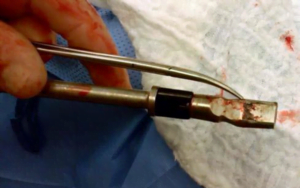
Cause:
- Insufficient rinsing of operating room linens after the laundry service has used caustic chemicals.
- When instruments are wrapped in these linens, the chemicals may be absorbed by the instruments.
Solution: Rinse linen thoroughly
Cause: Dried blood in box locks, serrations and ratchets appears to be rust. It has become baked-on; may cause cracked box locks.
Solution: Clean instruments thoroughly and immediately.
Cause: Excessive moisture left on the surface, box locks or Crevices in sterile wrapped packs. Also, excessive moisture left in the autoclave during and at the completion of the cycle.
Solution: Preheat the autoclave. Don’t rush the drying time – just crack the door. Check on the condition of the autoclave valves. A leaking valve can cause moisture or even permit the return of corrosive matter to the autoclave.
Cause: Alkali earth deposits left in inner surfaces of sterilizers resulting from local water. Foreign matter is deposited in instruments.
Solution: Use distilled or demineralized water during sterilization. If not wipe down inner surfaces weekly with acetic acid(vinegar and water) to remove impurities.
